


BLOG 7: THE DAMAGING WORLD OF SOCIAL MEDIA & MENTAL HEALTH
Digital Health
A large portion of digital health practices involve the sharing and curation of health information content.
The notion of "digital health" has been associated with such developments within health search, data, illness narratives, and information sharing, along with the positive personal implications of online health participation, particularly in the way people find support and tap expansive information networks (McCosker 2016).

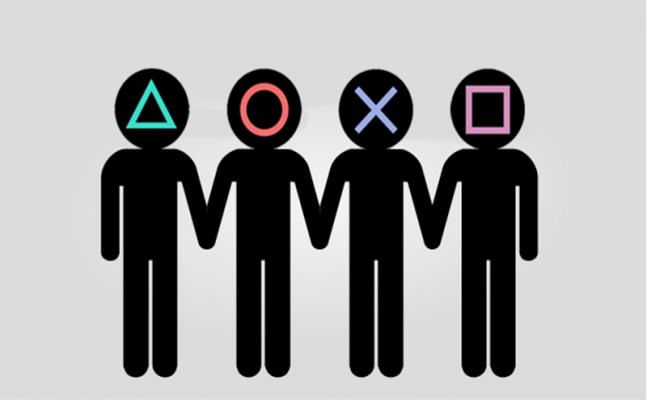
(Gonzalez 2021)
Digital health technology brings health citizens together in a community in order to share knowledge online peer interactions are social acts that create feelings of belonging, but our data also point to how feelings of belonging can be algorithmically produced, and the limits of equating sociality with publicity.
In addition to the ability to share experiential knowledge online, the publicity of social media combined with algorithmically produced metrics of ‘likes’ or views constitute micro nudges for further online peer interactions (Petrakaki, Hilberg & Waring 2021).
Social Media, What’s the Harm?
The pairing of mental health issues and social media use has crossed between popular moral panic and clinical or public health concern (McCosker 2016).
More than a billion people use Instagram, spending an estimated average of 30 minutes per day on the image-heavy platform (Abrams 2021). Behind the attractive Instagram persona lies intense anxiety and emotional suffering that brought renewed attention to the personal impact of social media platforms that revolve around visibility, impressions, and engagement through likes, shares, and comments (McCosker 2016).
Studies have linked Instagram to depression, body image concerns, self-esteem issues, social anxiety, and other problems. By design, the app capitalises on users’ biological drive for social belonging—and nudges them to keep on scrolling (Abrams 2021).
The Impact on Mental Health
The Instagram economy trades heavily in FOMO and YOLO. Instagram is a platform for people who, if not actively happy, are at least moderately invested in aggregating the happier moments of life (Keiles 2015). Part of what makes Instagram problematic is its addictive nature. Unlike a magazine, television show, or video game, the platform rarely delivers “stopping cues”—or gentle nudges that prompt users to move on to a different activity (Abrams 2021). Although, most teens report that social media makes them feel more connected to their friends, more included, and more confident, which suggests that online experiences are often multidimensional.
“Instagram, like many tech platforms, is designed to be bottomless, and you don’t have to do much to access that bottomless content. Just keep scrolling” (Adam Alter 2021)
Instagram users who engage in digital status seeking (looking for popularity online) and social comparison (evaluating oneself in relation to others) tend to experience negative psychological outcomes.
Instagram vs. Reality
The art of comparison is extremely common on Instagram. As users tend to follow both people they know personally and people they’ve never met, the app also blurs the boundaries between peers and celebrities. This more often than not leads to false social comparison when users contrast their appearance with idealised images. Posting edited selfies on apps like Instagram is also correlated with disordered eating behaviour, these behaviours tend to be more prevalent among younger users compared with older ones.
Therefore, Instagram can become a visual hub of unachievable goals that promote unhealthy body standards and misguided nutritional advice. Many hashtags, such as #cleaneating and #fitspo, provides a visualisation of ‘health’ and ‘wellness’ that revolve around certain body ideals.
What does healthy social media engagement look like for you? Leave your thoughts and opinions below!
References
Abrams, Z 2022, How can we minimize Instagram’s harmful effects?, APA, viewed 23 May 2022, <https://www.apa.org/monitor/2022/03/feature-minimize-instagram-effects#:~:text=Studies%20have%20linked%20Instagram%20to>.
Gonzalez, C, ‘How social media affects mental health’ [image], in The Daily Howl 2021, Wellness, viewed 22 May 2022, <https://thedailyhowl.org/2026/wellness/how-social-media-affects-mental-health/>.
Keiles, JL 2015, Depressiongrams, The Message, viewed 2 June 2022, <https://medium.com/message/depressiongrams-7f22011d6113>.
McCosker, A 2016, ‘Digital mental health and visibility: tagging depression’, in Digital media : transformations in human communication, Peter Lang, New York, pp. 31–39.
Petrakaki, D, Hilberg, E & Waring, J 2021, ‘The cultivation of digital health citizenship’, Social Science & Medicine (1982), vol. 270, pp. 1–7, viewed 17 May 2022, <https://pubmed.ncbi.nlm.nih.gov/33434718/>.
TEDx Talks 2019, Our Body Image and Social Media: Live Life Unfiltered | Keisha & Teagan Simpson Simpson | TEDxOttawa, 10 Decemeber, viewed 18 May 2020, <https://www.youtube.com/watch?v=iWc5rQ_YvYw&t=1s>.


Comments